

A Century of Legacy and Light
For one hundred years, the Cabugao Institute has stood as a beacon of education, character, and community. Founded on the dreams of our forebears, it has shaped generations of leaders, thinkers, and builders. This centennial celebration is not just a milestone for an institution; it is a testament to a century-long legacy that has profoundly shaped my own family's educational journey.
This space honors the history of the school that nurtured my earliest ambitions. Through historic photos and shared memories, we look back at the classrooms and mentors that laid our foundation. It was within these halls that the values of perseverance and passion were first instilled in me—values that eventually carried me across the ocean to complete my university degree in the United States, fulfilling a profound, whispered wish of my late mother.
Memoria Viva was born out of this deep connection to Cabugao Institute. This book was envisioned as a living gift, a tribute meant to be launched alongside my strong and beloved father during this very centennial milestone. Though he is no longer here to walk this stage with me, his blessing and the enduring spirit of our alma mater echo through every page. Here, we celebrate a century of excellence and the deeply rooted family bonds that began right here at home.
The Genesis of Cabugao Institute (1927)
In 1927, the dream of local education found its very first home in the Grand Ancestral House of Doña Generosa Concepcion de Singson. Serving as the first rented schoolhouse of the Cabugao Institute, this stately residence opened its doors to a pioneering batch of students and dedicated educators.
Because the property lacked a dedicated campus yard, the vibrant Town Plaza on the neighboring lot was transformed into the school's temporary playground. For those early Cabinians, the plaza was not just a public square; it was a sprawling canvas for physical drills, athletic games, and the joyful camaraderie that marked the birth of a century-long academic legacy.


The Second School House:
A Sanctuary Born of Vision, Tested by History
Following its initial days in a rented space, the Cabugao Institute found its true foundation in its second school house, a historic structure proudly owned by the institute's visionary founder, Don Leon Serna. This house stood as a monument to community resilience, transforming a private home into a bustling sanctuary of intellect and dreams for the youth of Cabugao.
It was within these walls that the early generations of "Cabinians" forged their values, guided by an unwavering commitment to education and faith. However, this cherished chapter of local heritage was destined to meet the crucible of wartime history. During the chaotic and fierce battles of the Liberation Period in World War II, as forces fought to reclaim the territory, the second school house was tragically burned to the ground.
Though the physical structure was reduced to ashes by the fires of war, the spirit it cultivated remained entirely unbroken. The sacrifice of Don Leon Serna and the memory of that historic house became a sacred legacy—proving that while a building can be destroyed, the flame of learning, heritage, and "Cabinian Pride" burns forever in the hearts of the generations that followed.
The Hill of Living Hope:
A Century of Truth at Cabugao Institute
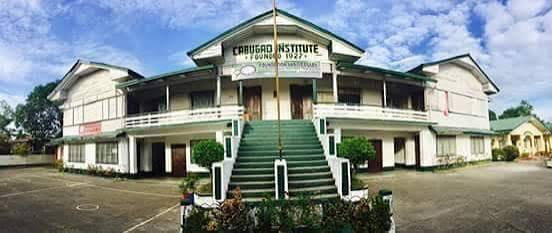
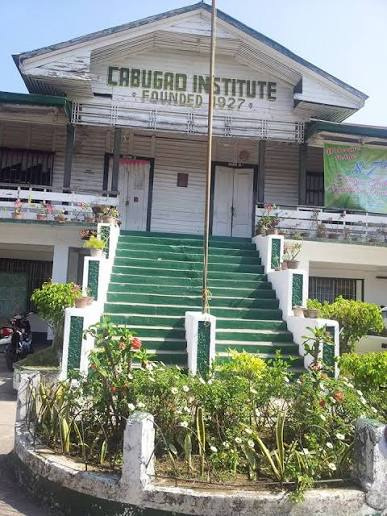
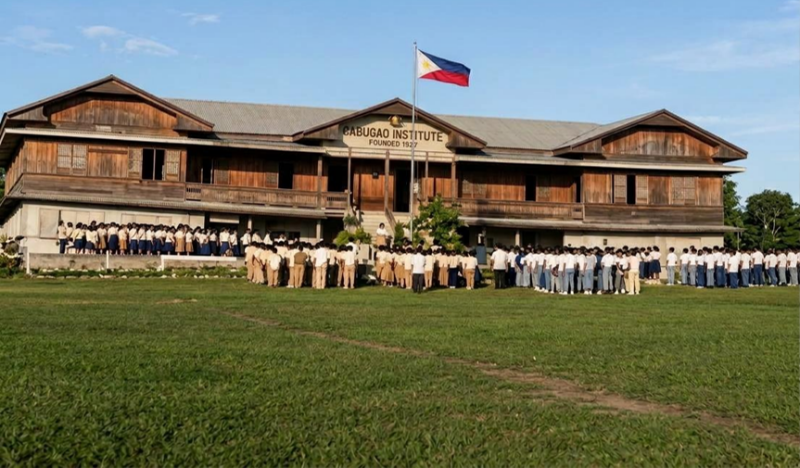
In 1941, a monumental chapter unfolded as the Cabugao Institute moved to its new, permanent main building. Erected on a rolling hill in the eastern part of the town, this structure was born from the collective prayers and unyielding spirit of pioneers who refused to let the light of education fade.
The journey to this hill was one of profound faith and perseverance. In its earliest days, the institute breathed life within a rented first schoolhouse, a modest space where the initial seeds of "Cabinian Pride" were planted. As the vision grew, the school moved to its second home—a house owned by the dedicated founder, Leon Serna. Though that second structure would later be tragically burned down during the chaotic fires of the Liberation period, the spirit of the institution remained completely unblemished and untouched by the flames. The move to the rolling hill in 1941 was not merely a relocation; it was the ultimate realization of a permanent sanctuary for the minds and souls of the youth.
The hill was far more than a geographic coordinate on a map. It became a physical testament to the structural heights that the youth of Cabugao could reach, a beacon visible to all, signaling that knowledge elevates human dignity. Shadows of the looming World War II soon tested the town, casting a dark cloud of uncertainty over the Philippines. Yet, this building stood firm—shielded by divine grace, the unbreakable resilience of the community, and the quiet prayers of mothers and fathers who looked up at that hill as a promise for their children's future.
Remarkably, that original 1941 building still stands today. As the institute approaches its historic 100th Centennial Celebration, this structural landmark remains an enduring bridge across time. It watches silently over generations of alumni, carrying the deep heartbeat of ancestors who believed that small-town dreams could cross vast oceans and echo across the globe. It stands as a living monument, proving that a foundation built on faith, sacrifice, and education will never crumble.